
What is Arabic Phonetics?
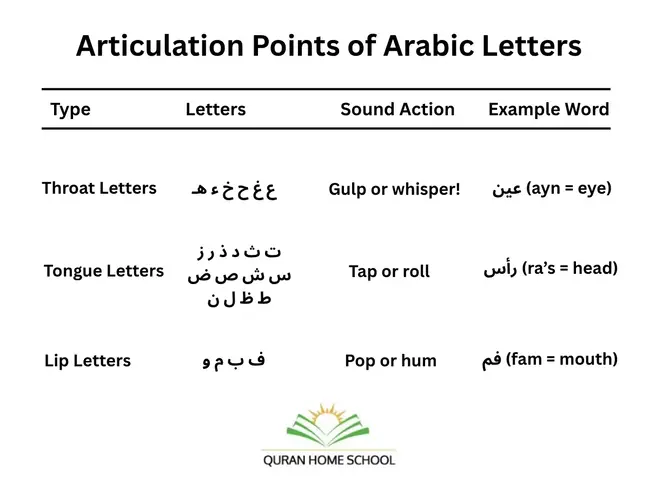
Arabic phonetics is the study of correct production of Arabic sounds. It teaches us how to pronounce each sound correctly, just like the Prophet Muhammad (PBUH) did. Each Arabic letter you pronounce has its own place (articulation point) in your mouth. Some are articulated from your throat (like  ), some from your lips (like
  ), and others buzz (like
  ).
).
When you learn the Arabic sounds properly, you can read the Quran beautifully. It’s like training your tongue to pronounce the words new to you. The more you practice Arabic Phonetics, the better you get. Note that in Arabic, even a tiny mistake in pronunciation can change the meaning of a word, so phonetics rules help us speak Arabic correctly.
Arabic Alphabet & their Pronunciation
Here’s an easy guide to the Arabic alphabet and how to pronounce them. There are 28 letters in Arabic. They’re written from right to left and change shape slightly depending on their position in a word (beginning, middle, end, or alone).
Pronunciation of Arabic Letters

Arabic Phonetics for Beginners
Arabic phonetics improves your pronunciation. Let's break it down in a simple way:
1. Throat Letters (Aqsa-e-Halq)
Letters: 
How to Pronounce:
 : Pronounced from the middle throat with vibration (e.g., ).
 : Pronounced with a guttural 'gh' sound (e.g., )’
Fact: These letters vibrate your throat.
2. Tongue Letters (Asaleeb-e-Lisaan)
Letters: 
How to Articulate:
 : Roll your tongue and say "rrrr"
  : Heavy ‘t’ with tongue elevated to the palate.
3. Lip Letters (Asaleeb-e-Shafatan)
Letters: 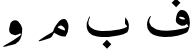
How to Pronounce:
- : Pop your lips like a tiny bubble "buh!"
 : Close your lips and hum "mmmm" (like tasting yummy food!)
4. Nose Letters (Ghunna)
Letters: 
How to Articulate:
- Say "
 " (noor) and let the sound buzz through your nose for 2 seconds!
5. Whistle Letters (Safeer)
Letters: 
How to Pronounce:
 : Hiss like a snake "ssss" with extra air!
Tip: Some letters are "heavy" (say with a strong voice, like  ) and some are "light" (say softly, like
  )
)
Arabic Vowel System
Short Vowel Sounds
These are three short vowel sounds (Harakat) symbols/marks that sit above or below consonants to modify pronunciation. These are:
- Fatha/ Zabr (ـَ): Always above a letter and sounds like "a" in "cat" (Example: دَرْس / dars = lesson)
- Kasra/ Zair (ـِ): Always placed below a letter and sounds like "i" in "sit" (Example: كِتَاب / kitaab = book)
- Damma/ Paish (ـُ): Damma is placed above a letter and sounds like "u" in "put" (Example: بُسْتَان / bus-taan = garden)
Long Vowel Sounds
These letters make that sound of short vowel sounds (fatha, damma, and kasra) extra long:
- Alif (ا): Stretches "aa" like in "far" (Example: بَاب / baab = door)
- Ya (ي): Stretches "ee" like in "see" (Example: نَوم / naweem = sleep)
- Waw (و): Stretches "oo" like in "moon" (Example: كُوب / koob = cup)
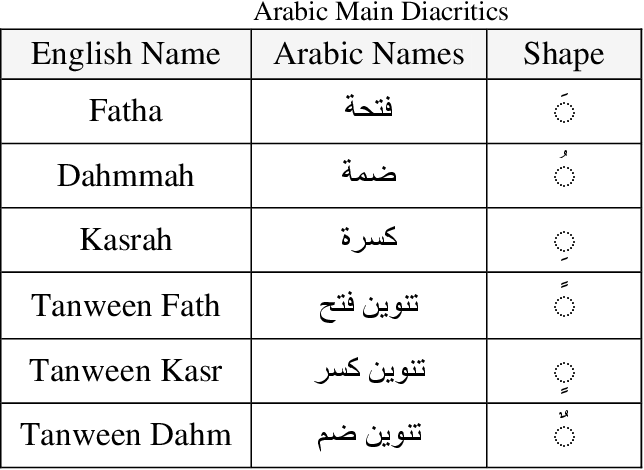
Arabic Diacritics
Arabic diacritics, also called tashkeel or harakat, are small symbols used with Arabic letters to represent vowel sound and other phonetic features. They help non-native speakers to speak Arabic with accuracy:
- Fatḥa (ـَ) = Short "a"
- Kasra (ـِ) = Short "i"
- Ḍamma (ـُ) = Short "u"
- Sukūn (ـْ) = "Stop"
- Shadda (ـّ) = Double the letter
- Tanwīn (ـً ـٍ ـٌ) = Adds "-an/-in/-un"
Consonants of the Arabic Alphabet
There are few Arabic consonants that sound like the English alphabet, e.g., ب (b) and ت (t). There is no direct English equivalent to some of the Arabic consonants. Some consonants come from deep in your throat!
Special Sounds
Special Arabic sounds include:
Sukoon (ـْ)
- Makes letters quiet for a second, like a red light.
- Example: مَدْ (mad) – the د stops suddenly.
Shaddah (ـّ)
- Doubles a letter’s sound – say it twice.
- Example: مَدَّ (madda) – the د gets extra push.
Tanween (ـً ـٍ ـٌ)
- Adds a tiny "-n" sound at the end:
- ً (an) like in كِتَابًا (kitaaban)
- ٍ (in) like in بَيْتٍ (baytin)
|
Sign |
What is it called? |
Sound |
|
|
Fathah/ Zabar |
a |
|
|
Kasrah/ Zair |
i |
|
|
Dhammah/ Paish |
u |
|
|
Double Fathah/ Zabar |
an |
|
|
Double Kasrah/ Zair |
in |
|
|
Double Dhammah/ Paish |
un |
|
|
Standing Fathah/ Zabar |
aa |
|
|
Standing Kasrah/ Zair |
ee |
|
|
Inverted Dhammah/ Paish |
oo |
|
|
Shaddah |
double letter |
|
|
Sukoon Jazam |
absence of vowel |
|
|
Madd |
aaaa (Longer Sound) |


Learn with Quran Home School
Learn the basics of Arabic, Islam and the Holy Quran in our online Quran courses. We help beginners and kids learn the essentials of Quran reading in our online Noorani Qaida course. Our qualified male and female Quran teachers guide kids and ladies to recite the Quran beautifully.
Quran Home School also offers other courses, including:
- Online Quran Reading Course
- Online Quran Recitation Course
- Online Quran Memorization Course
- Online Quran Translation Course
- Online Islamic Studies Course